.png)
If the Bible Is Just a Fairy Tale, Why Are So Many People Afraid of It?
There’s a strange irony in the modern world that’s hard to miss once you notice it.
On one hand, we’re told—confidently and repeatedly—that the Bible is outdated. A relic. A collection of myths written by primitive people who didn’t know where the sun went at night.
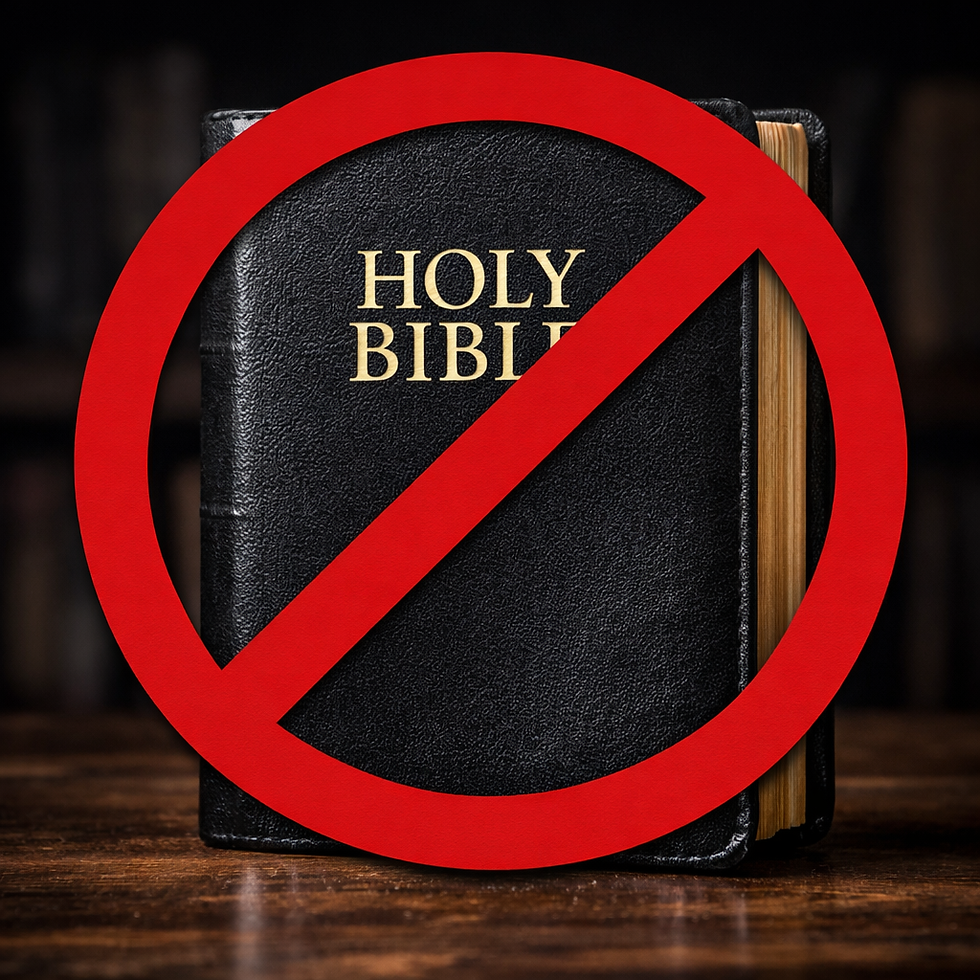
On the other hand, that same book is banned in classrooms, removed from libraries, restricted in public spaces, mocked in the media, and—throughout history—burned, outlawed, and smuggled like contraband.
That raises a fair question:
If the Bible is meaningless, why does anyone bother trying to erase it?
Fairy tales don’t get banned. They get ignored.
No One Declares War on What Has No Power
No government has ever held emergency meetings over Goldilocks and the Three Bears. No authoritarian regime has outlawed The Cat in the Hat. No underground networks risk imprisonment to smuggle copies of Alice in Wonderland across borders.
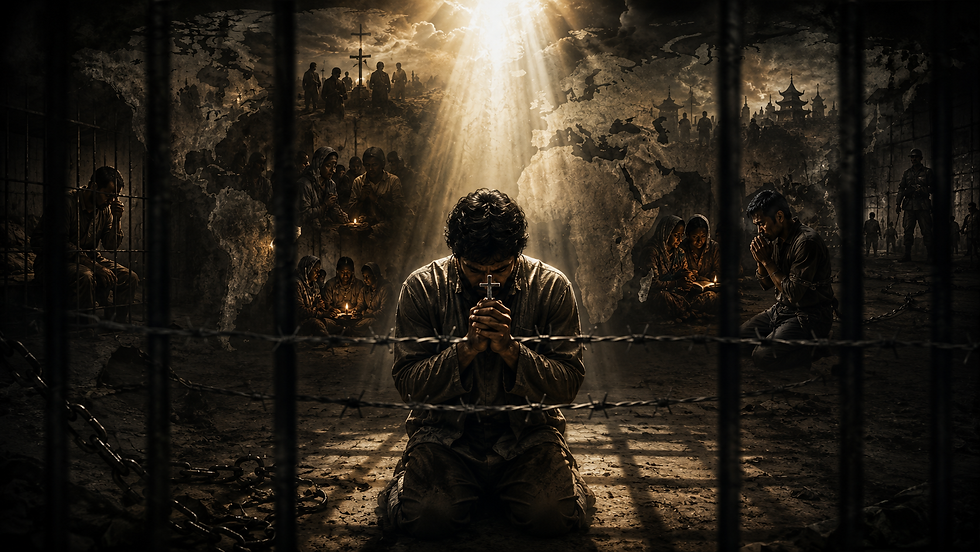
Yet for thousands of years, people have risked their lives to hide, translate, distribute, and read the Bible.
Why?
Because ideas that don’t matter don’t threaten power.
The Bible has outlived empires that tried to crush it. Pharaohs. Caesars. Popes. Kings. Communist regimes. Modern totalitarian states.
Each believed history would end with them standing and Scripture forgotten.
History disagreed.
Governments Fear What They Cannot Control
Authoritarian systems thrive on one central assumption: ultimate authority belongs to the state.
The Bible quietly but firmly disagrees.
It claims:
Authority does not originate with rulers.
Human dignity does not come from government permission.
Moral law exists above human law.
Leaders are accountable to a higher Judge.
That is an inconvenient book to have lying around.
When Scripture says, “We must obey God rather than men,” it introduces a ceiling on political power. When it declares all humans are made in God’s image, it undermines caste systems, racial hierarchies, and ideological purity tests. When it calls kings to repentance, it strips rulers of divine status.
That’s not a fairy tale. That’s a direct challenge.
Atheism Doesn’t Just Disbelieve—It Competes
Many atheists are perfectly content to ignore the Bible.
But the loudest opposition doesn’t come from indifference—it comes from resistance.
Why?
Because the Bible doesn’t merely make claims about God.It makes claims about reality:
What a human being is.
What good and evil are.
What truth is.
What meaning and purpose exist.
Modern secularism isn’t neutral—it offers a competing worldview. And competing worldviews don’t coexist peacefully when they answer the same ultimate questions.
You don’t burn books that pose no challenge. You burn the ones that refuse to stay in their lane.
Other Religions Don’t Try to Erase Empty Rivals
It’s also telling that opposition to the Bible isn’t limited to secular culture.
In many regions of the world, other religious systems ban or restrict Scripture outright. Not because it’s silly—but because it’s disruptive.
The Bible doesn’t just ask to be added to the shelf. It claims exclusivity. It declares that truth is not merely discovered inwardly, inherited culturally, or earned morally—but revealed.
That kind of claim forces a decision.
And nothing unsettles a system—religious or political—like a book that insists you can’t simply coexist with it.
Fire Is a Curious Response to Fiction
Throughout history, the Bible has been:
Burned publicly
Banned legally
Confiscated violently
Translated secretly
Smuggled at great cost
People don’t do that to stories they believe are harmless.
They do it to ideas that reshape hearts, reorder loyalties, and outlast threats.
Fire is a curious response to fiction—but a predictable response to conviction.
The Bible’s Most Dangerous Claim
The most unsettling thing about the Bible isn’t what it says about God.
It’s what it says about us.
It exposes pride. It names sin. It calls for repentance. It levels the powerful and dignifies the lowly. It refuses to let any group—religious, political, or intellectual—claim moral superiority.
And it does all of that without asking permission.
A book that merely comforts is tolerated. A book that confronts is resisted.
The Question That Won’t Go Away
So here’s the irony we can’t escape:
If the Bible is false, it should fade naturally. If it’s meaningless, it should bore itself into obscurity. If it’s powerless, it shouldn’t threaten anyone.
Yet it persists. It provokes. It survives.
Maybe the real question isn’t, “Why do people still believe the Bible?”
Maybe it’s this:
Why are so many people still trying so hard to make sure no one does?
Because fairy tales don’t need to be erased.
But truth—especially inconvenient truth—always has enemies.


Comments